
Badania
Publikacje
Artykuły oryginalne, przeglądowe i inne teksty.
Rok
Typ
Słowa kluczowe badań
Surface-Assisted Cyclodehydrogenation and Annulative Dimerization on TiO2(110): Formation of an Azacoronene and Its Octagon-Fused Dimer
Orthosteric Control of Acidity Through Sulfate Binding in a Neutral Cyclo[8]pyrrole
Redox–protonation landscape of indene-annulated perylenes: chemodivergent switching of multistate NIR chromophores
Część kolekcji tematycznej czasopisma Chemical Science Celebrating 200 Years of Benzene.
Three Conformations, Four Stimuli: Balancing Bond Order and Aromaticity in a Dual-BN Dihydrophenazine Switch

Multistage organic redox systems. Aromaticity as a guiding principle for materials chemistry
Praca wybrana do kolekcji HOT articles czasopisma Organic Chemistry Frontiers z 2025 roku.
43,44,47,48-Tetrathiaoctaphyrin(2.1.1.1.2.1.1.1) and its Organometallic bis-RhIII Complex: Coordination-Driven Switching of Conformation and Aromaticity
Heptannulated Perylene Diimides: Formation and Reactivity of Electron-Deficient Tropylium Cations and Heptafulvenes
Viologen–cycloparaphenylene hybrids: luminescent molecular nanocarbons for anion binding and specific vapor sorption
Część kolekcji tematycznej czasopisma Organic Chemistry Frontiers przygotowanej z okazji 60. urodzin profesora Franka Würthnera.
Pentacosacyclenes: cruciform molecular nanocarbons based on cyclooctatetraene
Triindenotriphenylenes: Spin-Frustrated Triskelion Triradicals with Excellent Ambient Stability
Difluorenoheteroles: topological control of π conjugation in diradicaloids and mixed-valence radical ions
Hierarchical Self-Assembly of Curved Aromatics: From Donor–Acceptor Porphyrins to Triply Periodic Minimal Surfaces
π-Extended Hexapyrrolylbenzenes: Exploring Charge-Transfer Phenomena in Donor-Acceptor Propellers
Dinor[7]helicene and Beyond: Divergent Synthesis of Chiral Diradicaloids with Variable Open-Shell Character
Tetrafluorenofulvalene as a sterically frustrated open-shell alkene
Differences in hemicellulose composition and pectin detection in Eocene and Miocene xylites

Tridecacyclene Tetraimide: An Easily Reduced Cyclooctatetraene Derivative
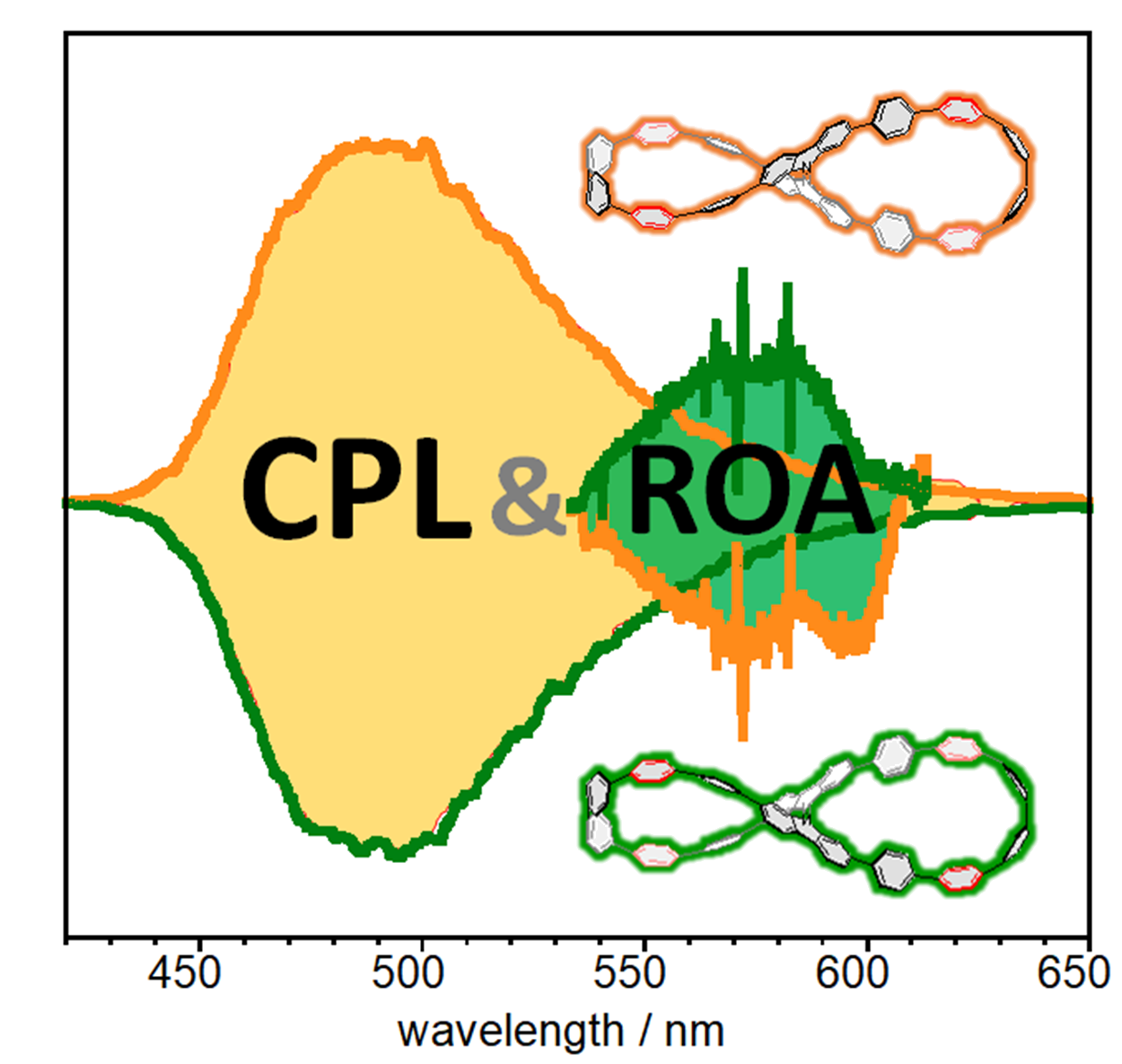
Simultaneous Detection of Circularly Polarized Luminescence and Raman Optical Activity in an Organic Molecular Lemniscate
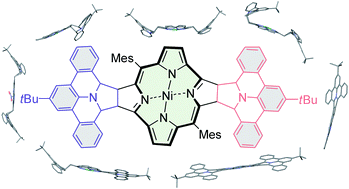
1,3-Dipolar cycloaddition of polycyclic azomethine ylide to norcorroles: towards dibenzoullazine-fused derivatives
Acenaphthylene-fused ullazines: fluorescent π-extended monopyrroles with tunable electronic gaps
Emerging applications of curved aromatic compounds

Synthesis of a donor–acceptor heterodimer via trifunctional completive self-sorting
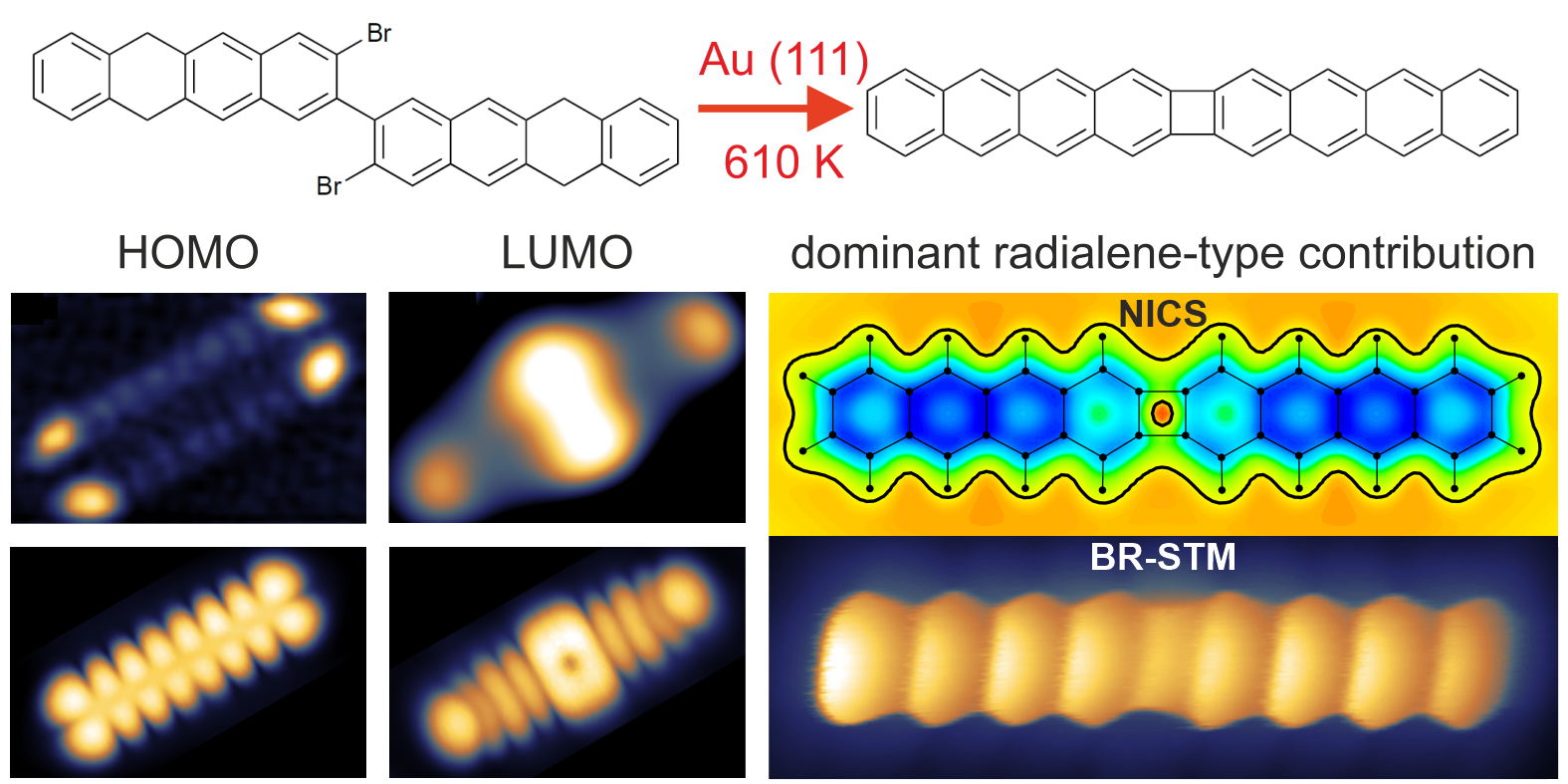
On-surface synthesis of a phenylene analogue of nonacene
Helicity Modulation in NIR-Absorbing Porphyrin-Ryleneimides
Naphthalimide-Fused Dipyrrins: Tunable Halochromic Switches and Photothermal NIR-II Dyes
Praca opublikowana w numerze specjalnym Functional Carbon-Rich Materials, poświęconym Klausowi Müllenowi.
Acenaphtho[1,2-d][1,2,3]triazole and Its Kuratowski Complex: A π-Extended Tecton for Supramolecular and Coordinative Self-Assembly
Recent Advances in Heterocyclic Nanographenes and Other Polycyclic Heteroaromatic Compounds
An Open-Shell Coronoid with Hybrid Chichibabin–Schlenk Conjugation
Preservation of hemicellulose remnants in sedimentary organic matter
Donorowo-akceptorowe struktury oligopirolowe: projektowanie, synteza, właściwości
Wiad. Chem. 2021, 75, 593–602.
Praca opublikowana w zeszycie jubileuszowym poświęconym profesorowi Lechosławowi Latosowi-Grażyńskiemu.

Feeding a Molecular Squid: A Pliable Nanocarbon Receptor for Electron-Poor Aromatics
Praca znalazła się na okładce JACS i została omówiona w JACS Spotlight.
Porphyrin–Ryleneimide Hybrids: Tuning of Visible and Near-Infrared Absorption by Chromophore Desymmetrization
Praca omówiona w SYNFACTS.
Porphyrin-Ryleneimide Hybrids: Low-Bandgap Acceptors in Energy-Transfer Cassettes
Praca opublikowana w numerze Tateshina Conference 20th Anniversary Issue i wyróżniona okładką.
Electrochemical Polymerization of Pyrrole–Perimidine Hybrids: Low-Band-Gap Materials with High n-Doping Activity
Bipyrrole boomerangs via Pd-mediated tandem cyclization–oxygenation. Controlling reaction selectivity and electronic properties
Część numeru tematycznego C–H Functionalization for Materials Science.
Aromatic Nanosandwich Obtained by σ-Dimerization of a Nanographenoid π-Radical
Praca omówiona w JACS Spotlight.
π-Extended Donor–Acceptor Porphyrins and Metalloporphyrins for Antimicrobial Photodynamic Inactivation
Electrophilic Aromatic Coupling of Hexapyrrolylbenzenes. A Mechanistic Analysis
Część numeru specjalnego Functional Organic Materials.
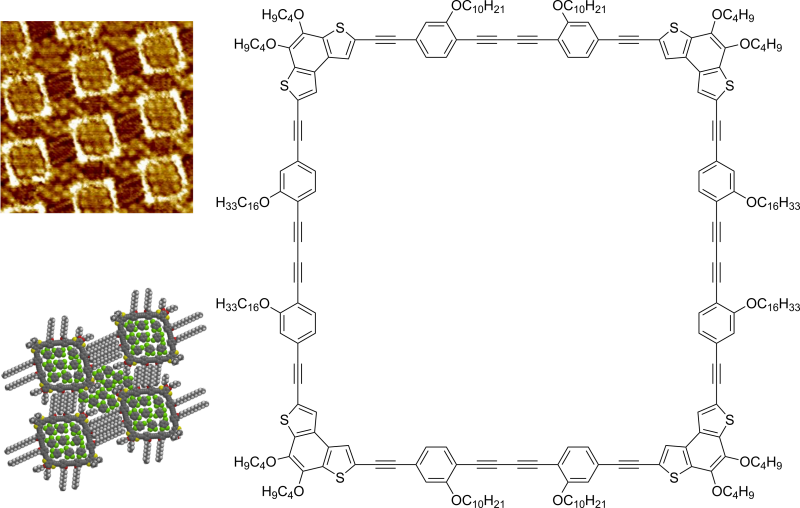
Nanopatterns of arylene–alkynylene squares on graphite: self-sorting and intercalation
Część numeru tematycznego Novel Macrocycles.
Lemniscular [16]Cycloparaphenylene: A Radially Conjugated Figure-Eight Aromatic Molecule
Praca omówiona w Chemistry World.
5,10-Dimesityldiindeno[1,2-a:2′,1′-i]phenanthrene: a stable biradicaloid derived from Chichibabin's hydrocarbon
Stereocontrolled Synthesis of Chiral Heteroaromatic Propellers with Small Optical Bandgaps
Bowls, Hoops, and Saddles: Synthetic Approaches to Curved Aromatic Molecules
Fully Conjugated [4]Chrysaorene. Redox-Coupled Anion Binding in a Tetraradicaloid Macrocycle
Praca włączona do numeru wirtualnego JACS Young Investigators.
An Aromatic Riddle: Decoupling Annulene Conjugation in Coronoid Macrocycles

Carbocyclization approaches to electron-deficient nanographenes and their analogues
Pd-Induced Double C–H Bond Activation in Annulative Syntheses of Bipyrrole Boomerangs: Mechanistic Insights from NMR Spectroscopy and Computation
Electron-Deficient Bipyrrole Boomerangs: Bright Fluorophores Obtained via Double C-H Bond Activation
Extension of antiaromatic norcorrole by cycloaddition
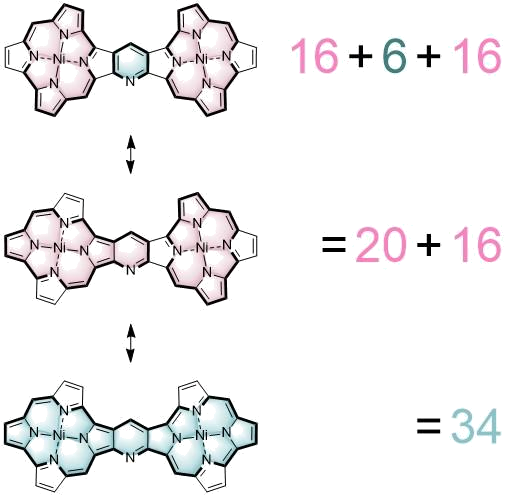
Pyridine-Fused Bis(Norcorrole) through Hantzsch-Type Cyclization: Enhancement of Antiaromaticity by an Aromatic Bridge
Ethynylene-linked Figure-Eight Octaphyrin(1.2.1.1.1.2.1.1): Synthesis and Characterization of Its Two Oxidation States
Heterocyclic Nanographenes and Other Polycyclic Heteroaromatic Compounds: Synthetic Routes, Properties, and Applications
Protonation Dependent Topological Dichotomy of Core Modified Hexaphyrins: Synthesis, Characterization, and Excited State Dynamics
Octulene: A Hyperbolic Molecular Belt that Binds Chloride Anions
Hot Paper. Praca omówiona w Chemistry Views.
Reversible Carbon–Carbon Bond Breaking and Spin Equilibria in Bis(pyrimidinenorcorrole)
Bandgap Engineering in π-Extended Pyrroles. A Modular Approach to Electron-Deficient Chromophores with Multi-Redox Activity
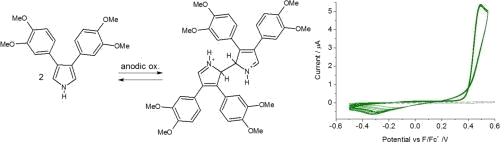
Mechanism of 3,4-diarylpyrrole electrooxidation
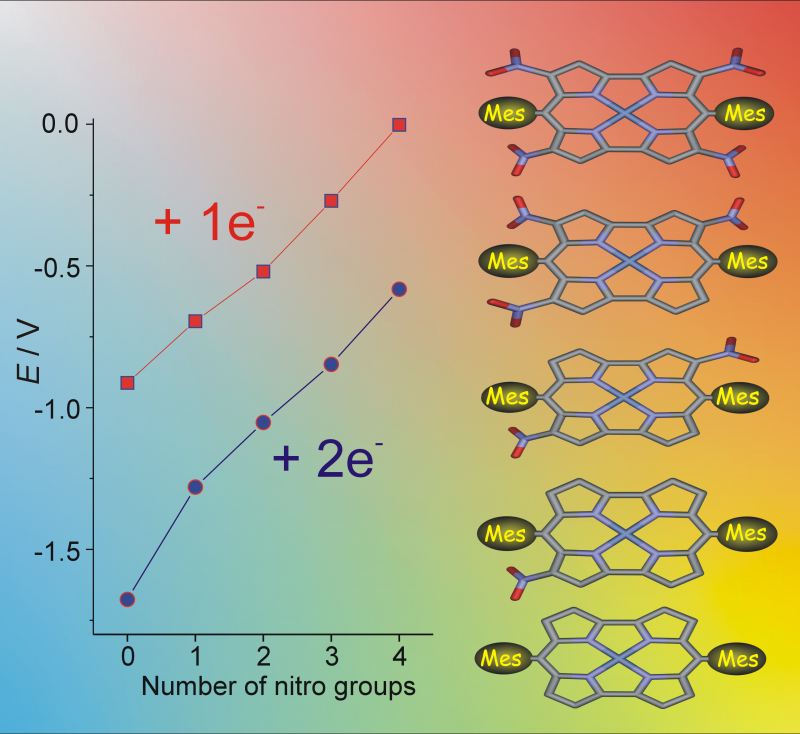
Nitration of Norcorrolatonickel(II): First Observation of a Diatropic Current in a System Comprising a Norcorrole Ring
Synthesis of a peripherally conjugated 5-6-7 nanographene
Chrysaorenes: assembling coronoid hydrocarbons via the fold-in synthesis
Stereoselective Wittig Olefination as a Macrocyclization Tool. Synthesis of Large Carbazolophanes
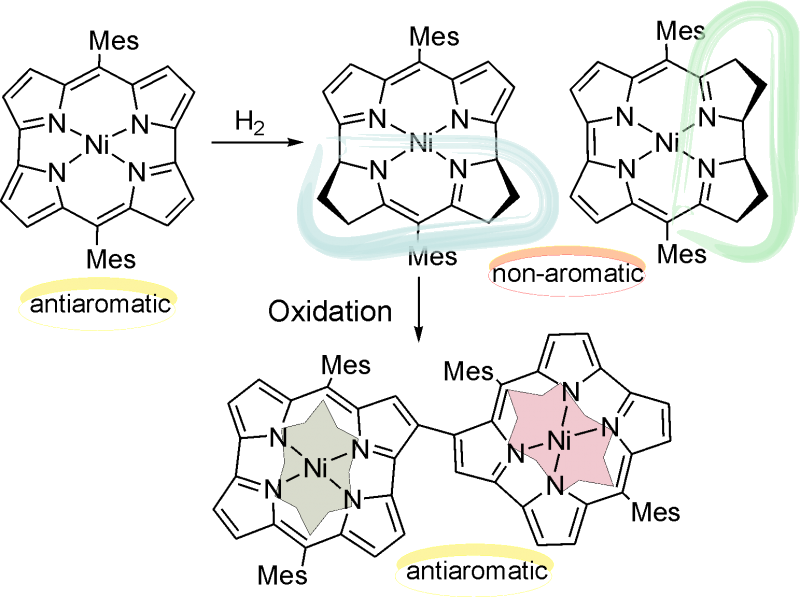
Towards Norcorrin: Hydrogenation Chemistry and the Heterodimerization of Nickel(II) Norcorrole
Möbius–Hückel topology switching in an expanded porphyrin cation radical as studied by EPR and ENDOR spectroscopy
Highly Strained Nonclassical Nanotube End-caps. A Single-Step Solution Synthesis from Strain-Free, Non-Macrocyclic Precursors
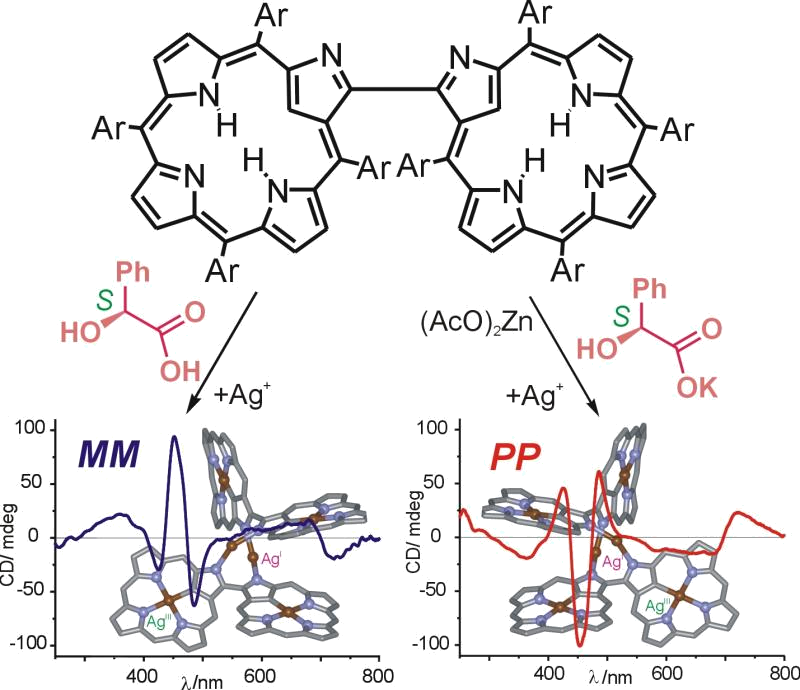
Bis(N-Confused Porphyrin) as a Semirigid Receptor with a Chirality Memory: A Two-Way Host Enantiomerization through Point-to-Axial Chirality Transfer
Expanded Hexapyrrolohexaazacoronenes. Near-Infrared Absorbing Chromophores with Interrupted Peripheral Conjugation
Heteroaromatic Belts through Fold-in Synthesis: Mechanistic Insights into a Macrocycle-Templated Friedel–Crafts Alkylation
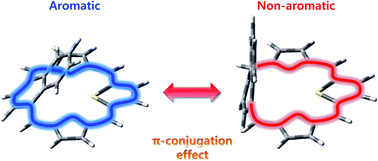
The effect of π-conjugation in the macrocyclic ring on the photophysical properties of a series of thiaaceneporphyrinoids
Regioselective Internal Carbonylation of the 2-Aza-21-carbaporphyrin: Access to Configurationally Stable Chiral Porphyrinoids
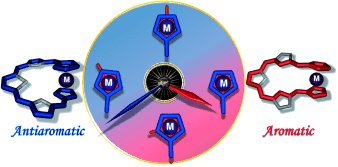
Hückel and Möbius Expanded para-Benziporphyrins: Synthesis and Aromaticity Switching
Anomalous Stereoselectivity in the Wittig Reaction: The Role of Steric Interactions
Recent Advances in the Synthesis of Bowl-Shaped Aromatic Compounds
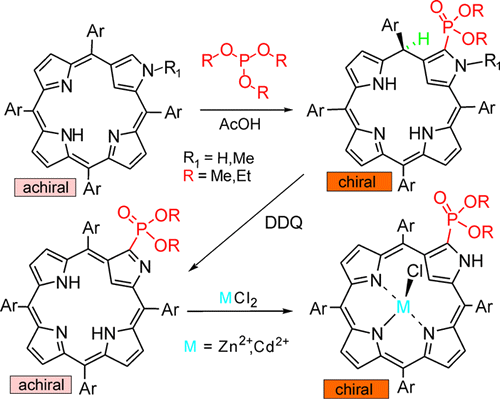
3-(Dialkoxyphosphoryl)-N-confused Phlorin and Porphyrin. Synthesis, Stereochemistry, and Coordination Properties
Synthesis of Bis(phenanthropyrroles) via a Tandem Scholl Oxidation
The Fold-In Approach to Bowl-Shaped Aromatic Compounds: Synthesis of Chrysaoroles
Praca omówiona w SYNFACTS.
Ruthenocenoporphyrinoids: Conformation Determines Macrocyclic pi Conjugation Transmitted Across a d-Electron Metallocene
Peripherally Fused Porphyrins via the Scholl Reaction: Synthesis, Self-Assembly, and Mesomorphism
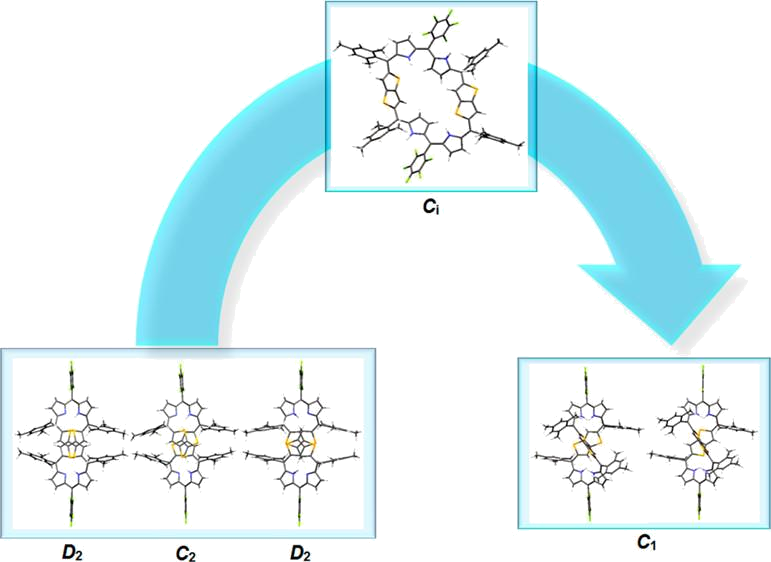
Figure Eights, Möbius Bands, and More: Conformation and Aromaticity of Porphyrinoids
π Conjugation Transmitted across a d-Electron Metallocene in Ferrocenothiaporphyrin Macrocycles
Praca omówiona w SYNFACTS.
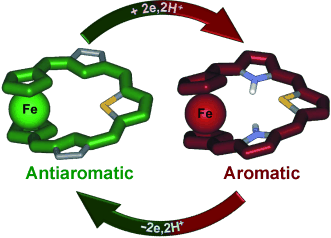
Three-Level Topology Switching in a Molecular Möbius Band
Steric Control in the Synthesis of p -Benziporphyrins. Formation of a Doubly N-Confused Benzihexaphyrin Macrocycle
Aromaticity and Tautomerism in Porphyrins and Porphyrinoids
Aromaticity in Heterocyclic Compounds 2009, 83–153.
Helical Porphyrinoids: Incorporation of Ferrocene Subunits into Macrocyclic Structures
Octamethyl-octaundecylcyclo[8]pyrrole: A Promising Sulfate Anion Extractant
![TOC image for Octamethyl-octaundecylcyclo[8]pyrrole: A Promising Sulfate Anion Extractant](/generated/images/publication-JACS2007LRE-publication-card-98edddd3af1a5abd.webp)
Single-Boron Complexes of N-Confused and N-Fused Porphyrins
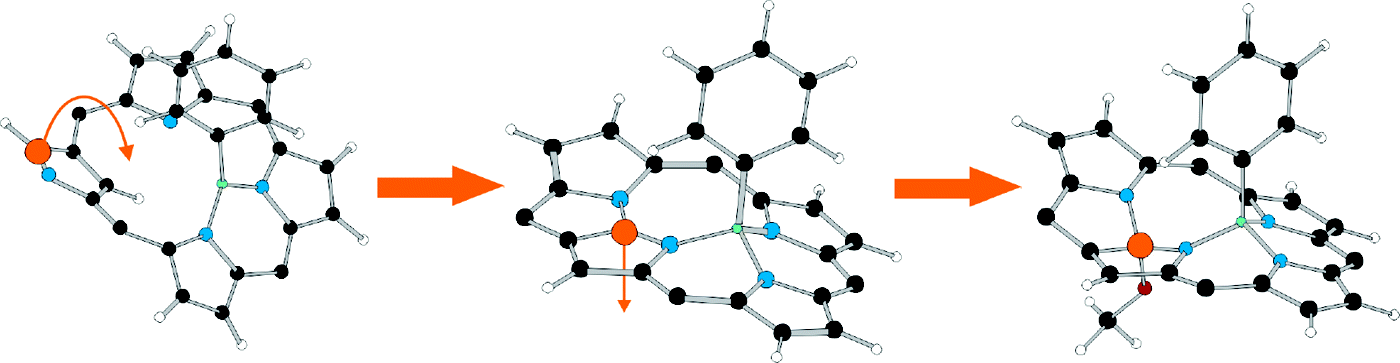
Expanded Porphyrin with a Split Personality: A Hückel–Möbius Aromaticity Switch
Discotic Liquid-Crystalline Materials Based on Porphycenes: A Mesogenic Metalloporphycene–Tetracyanoquinodimethane (TCNQ) Adduct
Supramolecular Liquid Crystals Based on Cyclo[8]pyrrole
Praca omówiona w SYNFACTS.
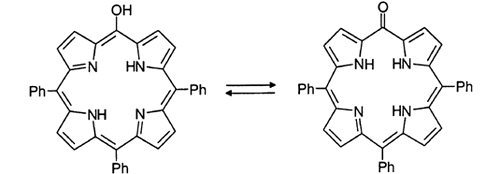
22-Hydroxybenziporphyrin: Switching of Antiaromaticity by Phenol-Keto Tautomerization
Inverted Sapphyrin: A New Family of Doubly N-Confused Expanded Porphyrins
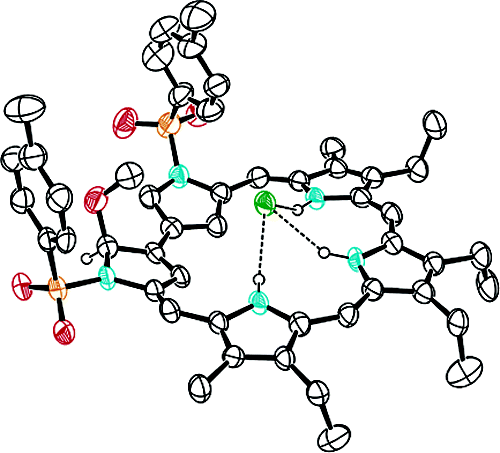
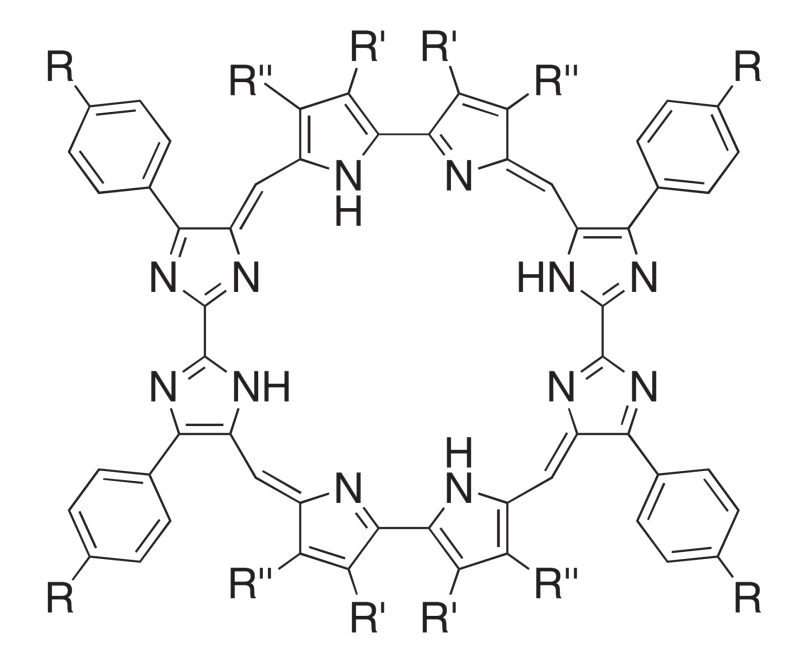
Tetraazaoctaphyrin A biimidazole-containing expanded porphyrin
Benziporphyrins: Exploring Arene Chemistry in a Macrocyclic Environment
Conformational Flexibility of Nickel(II) Benziporphyrins
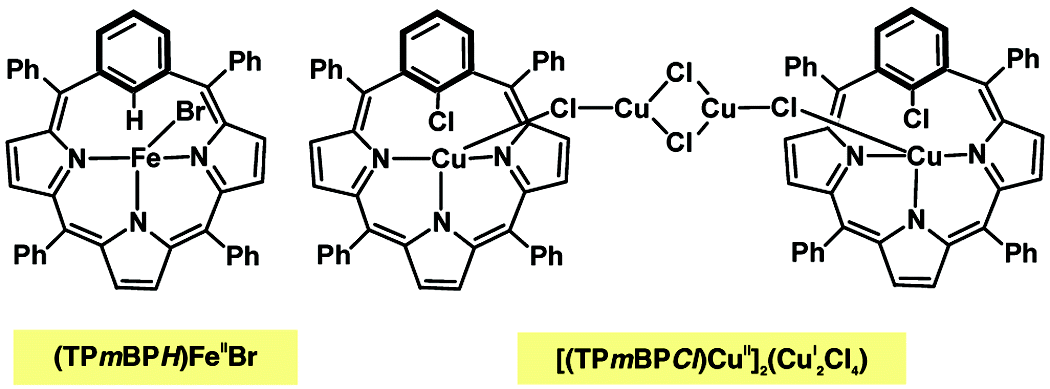
Iron and Copper Complexes of Tetraphenyl-m-benziporphyrin: Reactivity of the Internal C-H Bond
Cadmium(II) and Nickel(II) Complexes of Benziporphyrins. A Study of Weak Intramolecular Metal-Arene Interactions
Core-Modified Porphyrin Incorporating a Phenolate Donor. Characterization of Pd(II), Ni(II), Zn(II), Cd(II), and Fe(III) Complexes
Regioselective Pyridination of m-Benziporphyrin
Tetraphenyl-p-benziporphyrin: A Carbaporphyrinoid with Two Linked Carbon Atoms in the Coordination Core
Monomeric and Dimeric Iron(III) Complexes of 5-Hydroxy-10,15,20-triphenylporphyrin: Formation of Cyano and Pyridine Complexes of (5-Oxo-10,15,20-triphenylphlorin)iron
meso Substituent Effects on the Geometric and Electronic Structures of High-Spin and Low-Spin Iron(III) Complexes of Mono-meso-Substituted Octaethylporphyrins

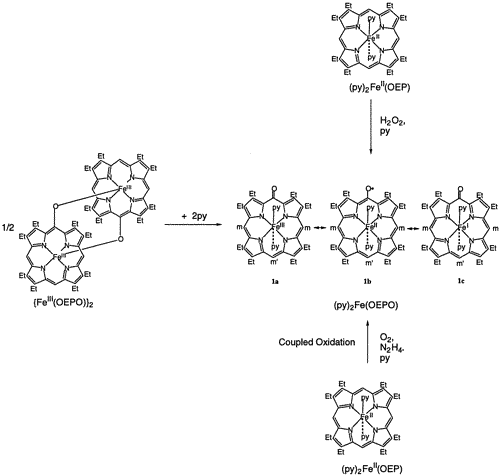
Reactivity of Mono-Meso-Substituted Iron(II) Octaethylporphyrin Complexes with Hydrogen Peroxide in the Absence of Dioxygen. Evidence for Nucleophilic Attack on the Heme
Palladium(II) Complexes of Oxybenziporphyrin
Tetraphenylbenziporphyrin—A Ligand for Organometallic Chemistry
Symetria molekuł a stereochemia
Wiad. Chem. 1999, 53, 17–64.