In pictures

Cover art

Journal covers and highlighted artwork connected to lab publications.

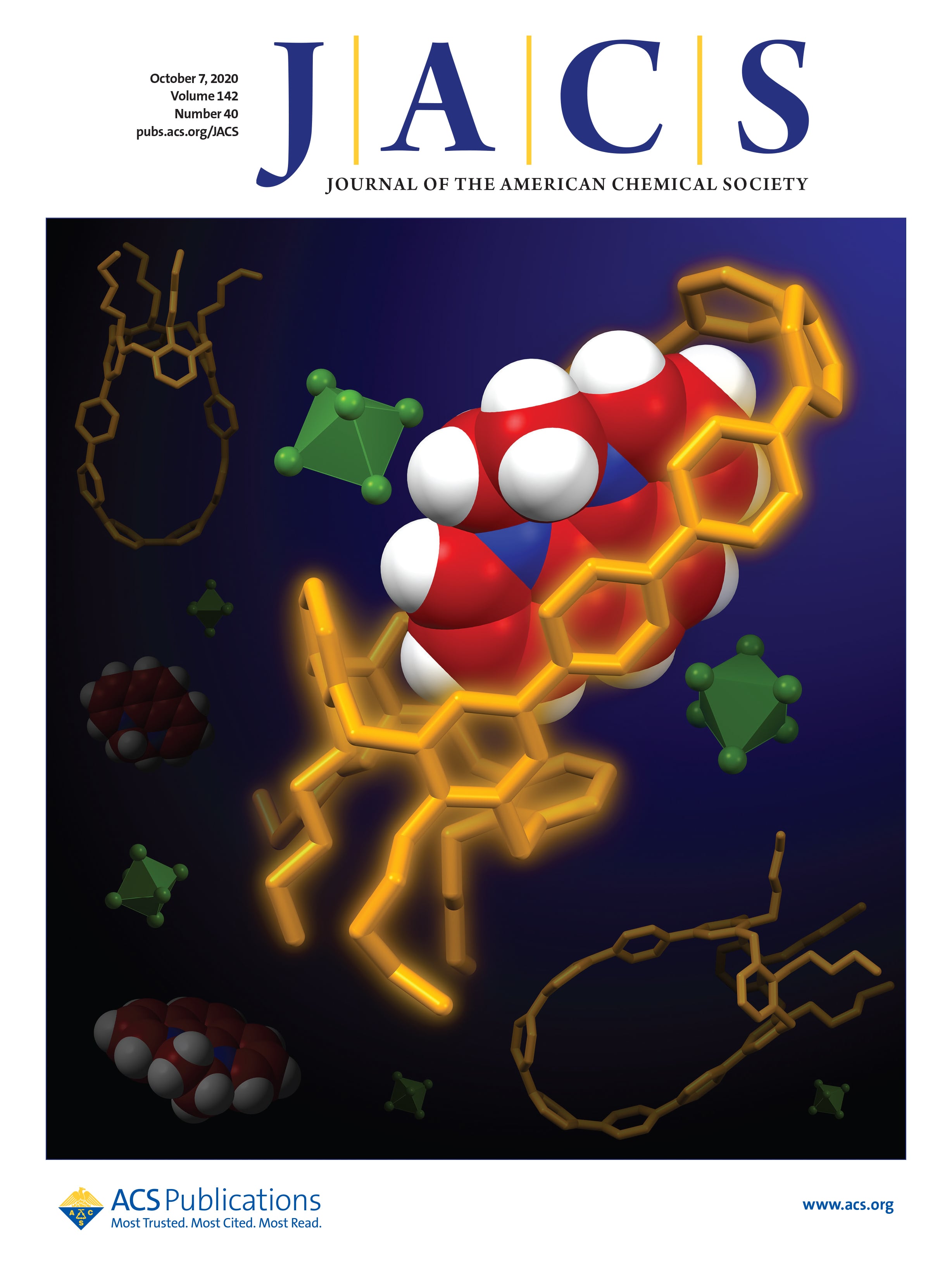
J. Am. Chem. Soc. 40/2020 front cover

J. Am. Chem. Soc. · 2020

Molecular squid

The fluorescent “molecular squid,” a strained molecular nanocarbon receptor derived from calix[4]arene, binds neutral and cationic guest molecules in solution. In the solid state, it forms stable inclusion complexes and displays porosity toward gases and vapors.
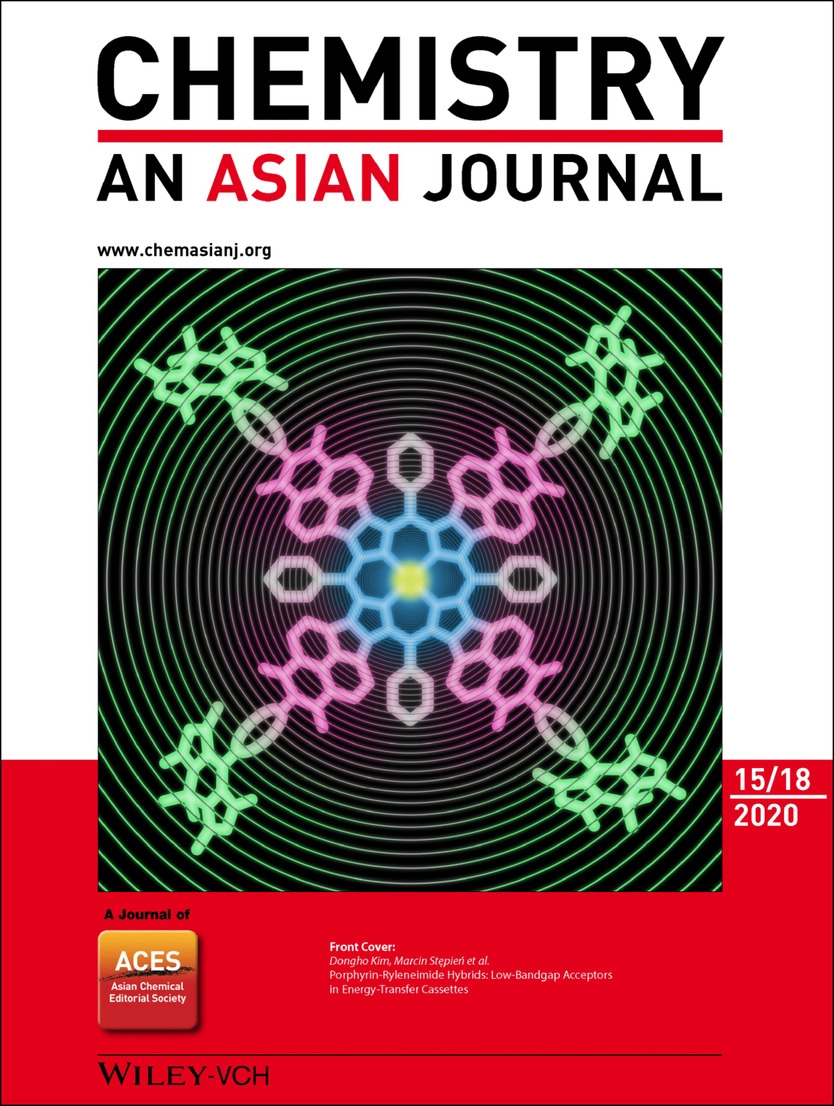
Chem. Asian J. 15/18 2020 front cover

Chem. Asian J. · 2020

Multichromophore cassettes

Efficient energy and electron transfer in photoexcited dye assemblies is central to biological and artificial light-harvesting systems. The highlighted work demonstrates Förster-type transfer in multichromophore cassettes containing four BODIPY units linked to a pseudo-tetrahedral acceptor dye combining fused porphyrin and perylene diimide motifs.

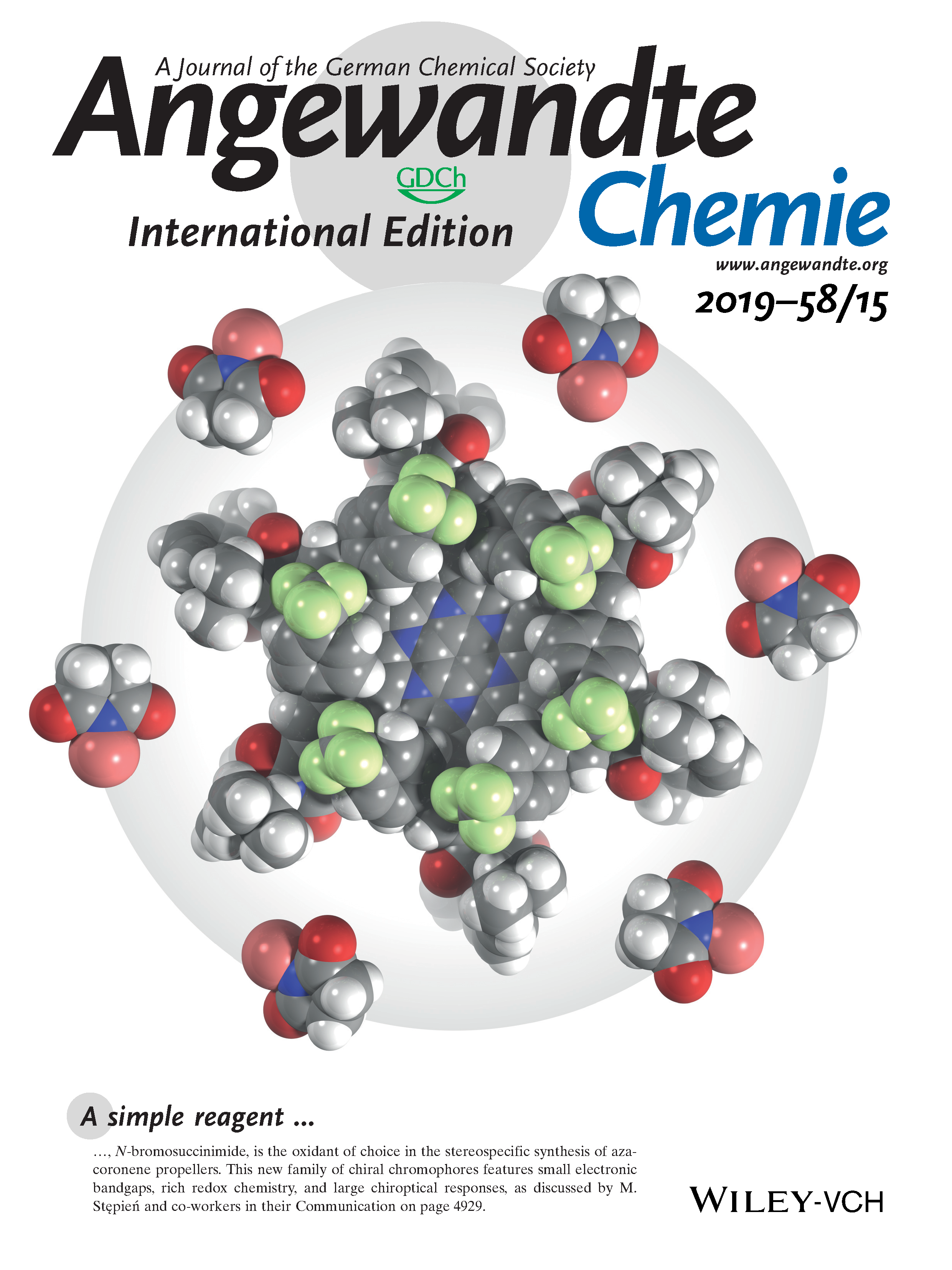
Angew. Chem. 15/2019 back cover

Angew. Chem. · 2019

NBS magic

Stereospecific synthesis of azacoronene propellers requires a brominating oxidant such as N-bromosuccinimide or Br₂; other oxidants do not produce the same outcome. These chiral chromophores combine small electronic band gaps with rich redox chemistry and strong chiroptical responses.

Angew. Chem. 1/2019 frontispiece

Angew. Chem. · 2019

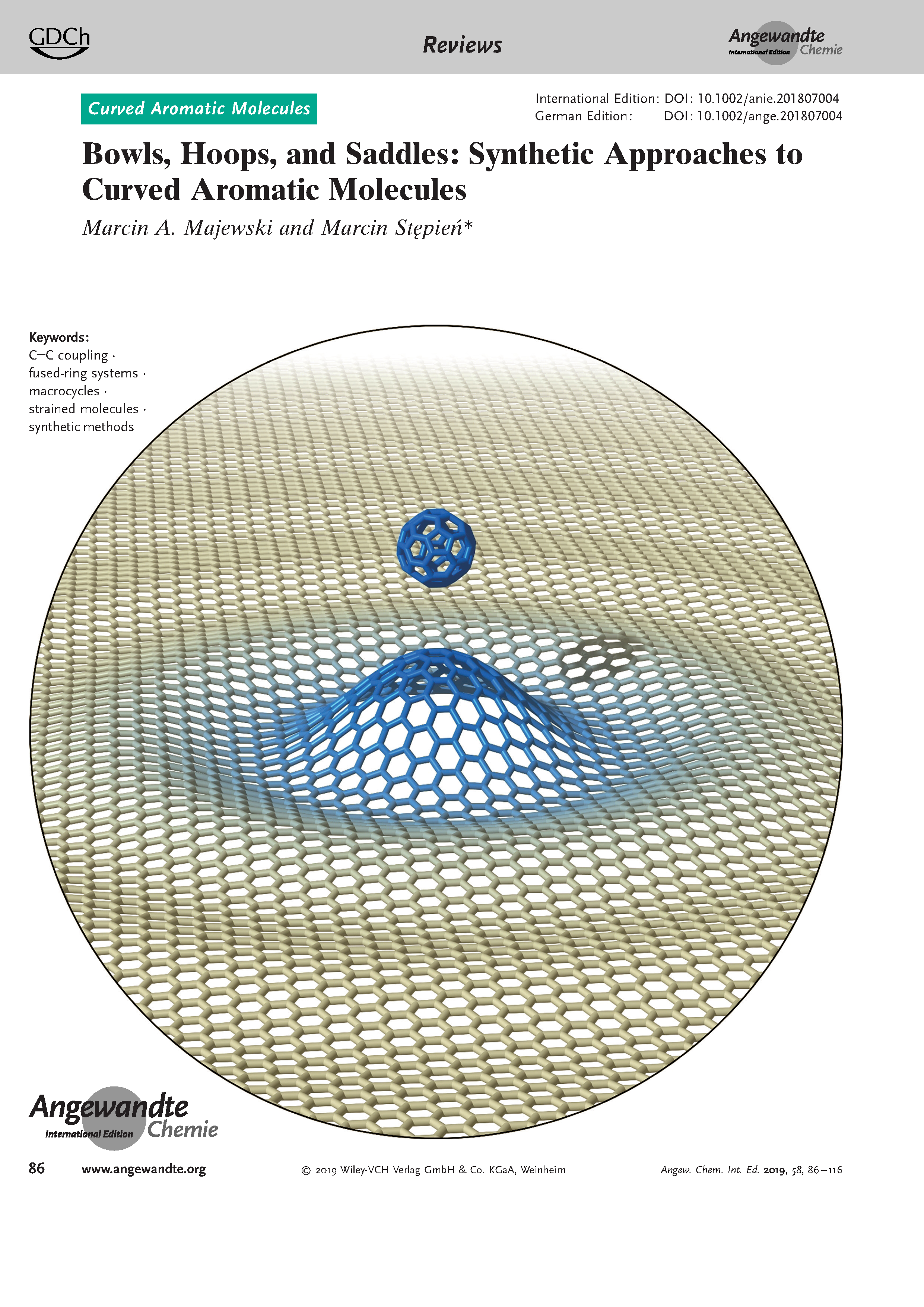
Bowls, hoops, and saddles

This review surveys advances in the chemistry of curved aromatic molecules, focusing on synthetic methods that efficiently introduce strain into π-conjugated frameworks and on the structural diversity enabled by modern methodology.

Chem. Commun. 82/2015 front cover

Chem. Commun. · 2015

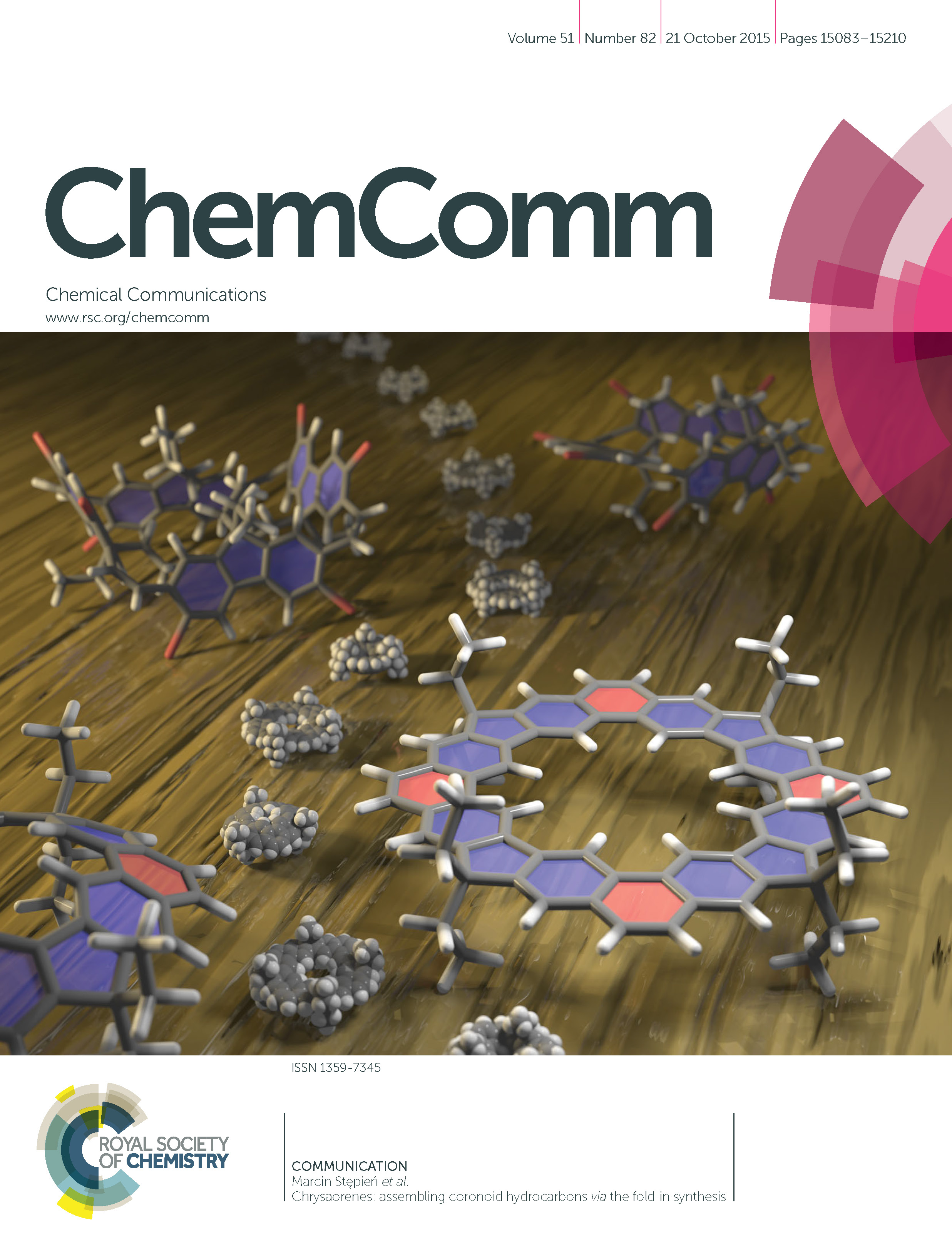
Hydrocarbon bugs

Chrysaorenes and their macrocyclic precursors do not usually swarm across laboratory floors. Nevertheless, it may be wise to read the paper before such an encounter.

J. Am. Chem. Soc. 4/2015 front cover

J. Am. Chem. Soc. · 2015

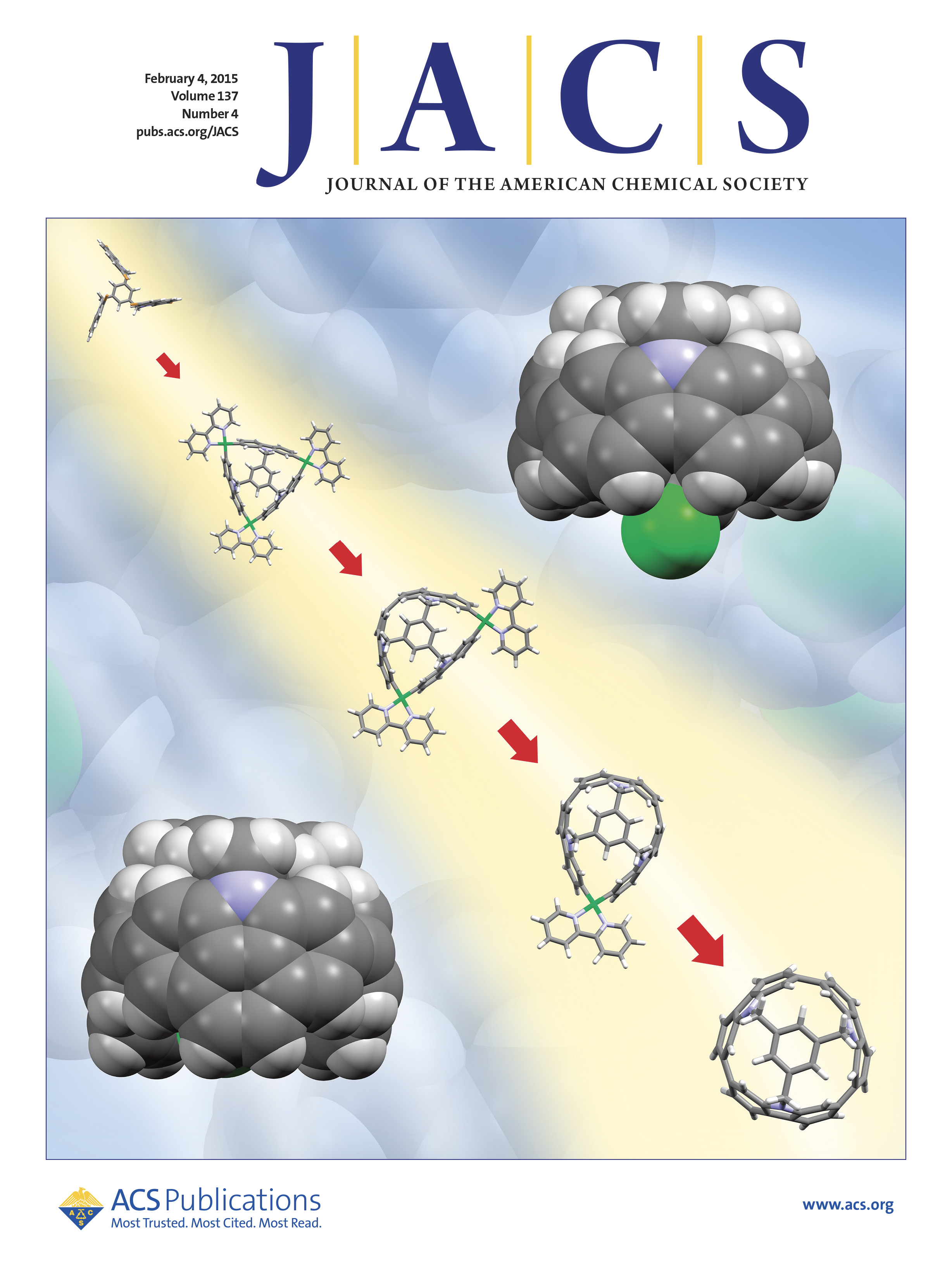
End caps by homocoupling

Deep, fluorescent aromatic bowls resembling carbon nanotube end caps are formed in one step from simple heterocyclic precursors through Ni(0)-mediated synchronized homocoupling. The process introduces substantial strain by coordinating transmetalation and reductive elimination within multinuclear metallacycles.

Angew. Chem. 6/2013 inside back cover

Angew. Chem. · 2013

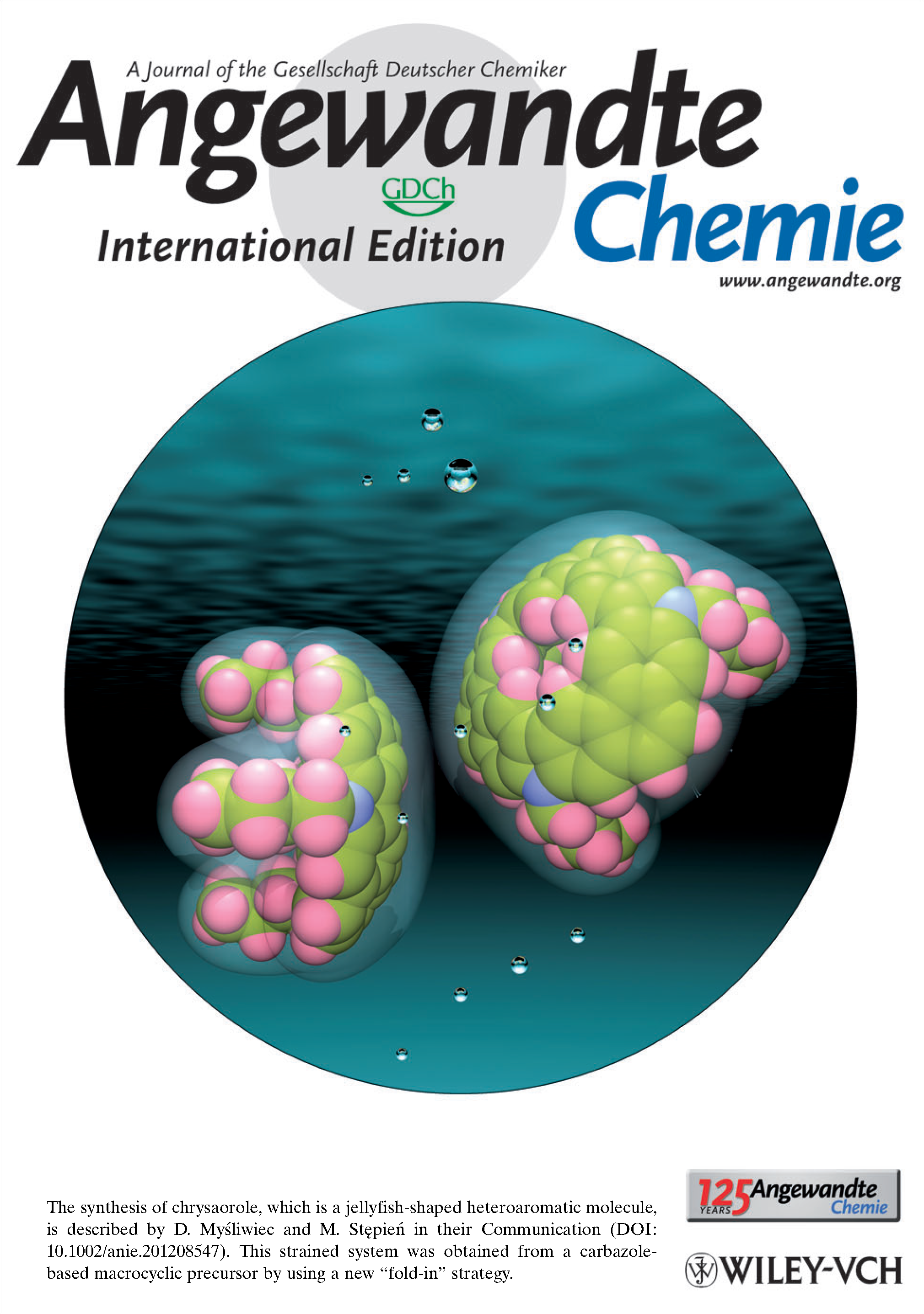
Chrysaorole

Chrysaorole, a strained, jellyfish-shaped heteroaromatic molecule, was synthesized from a carbazole-based macrocyclic precursor using the fold-in strategy. Its name refers to Chrysaora, a genus of jellyfish.

Angew. Chem. 19/2011 frontispiece

Angew. Chem. · 2011

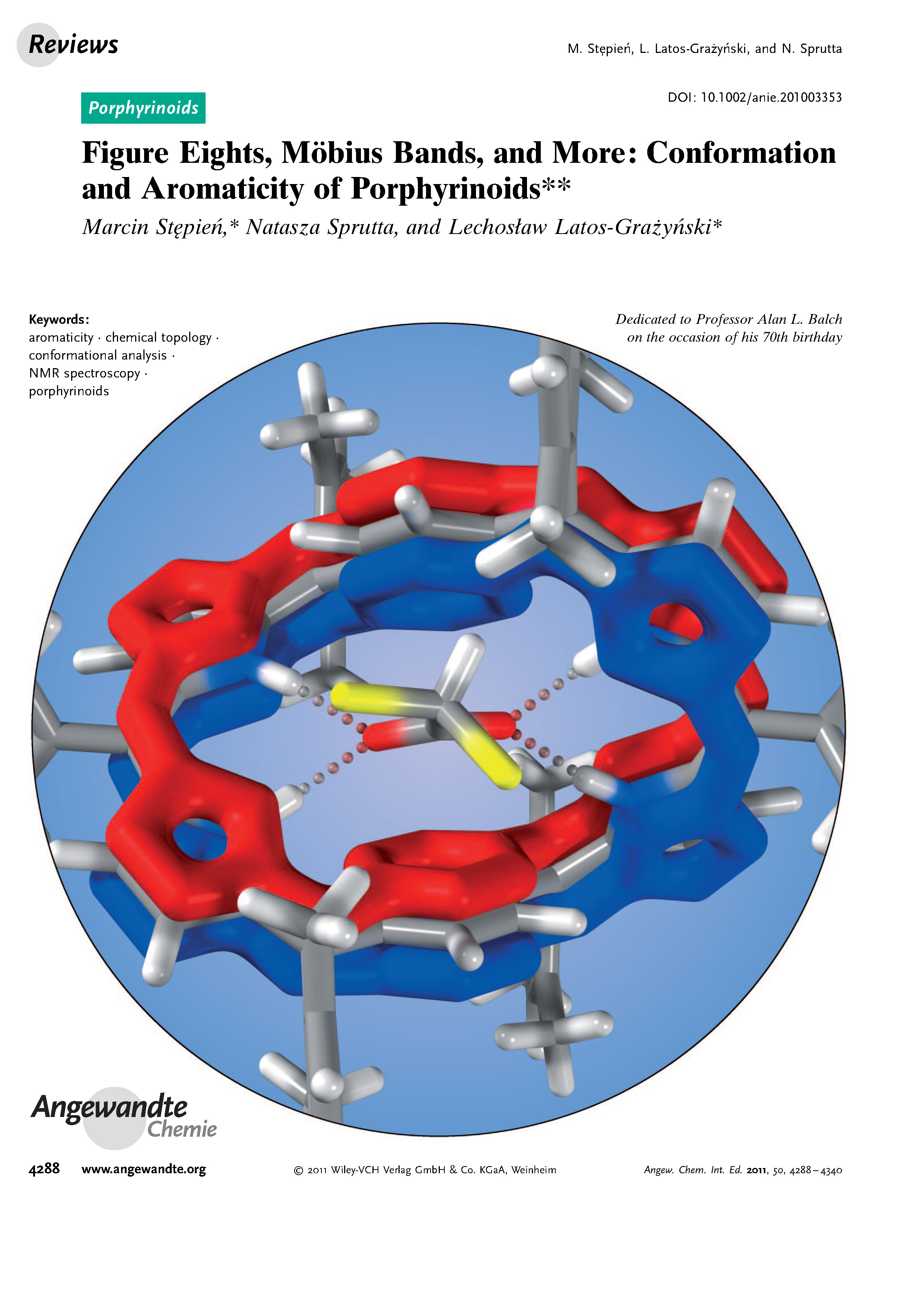
Figure eights and more

The image depicts host–guest binding between the figure-eight dication of di-p-benzihexaphyrin and a dichloroacetate anion, illustrating one of the motifs discussed in the review.

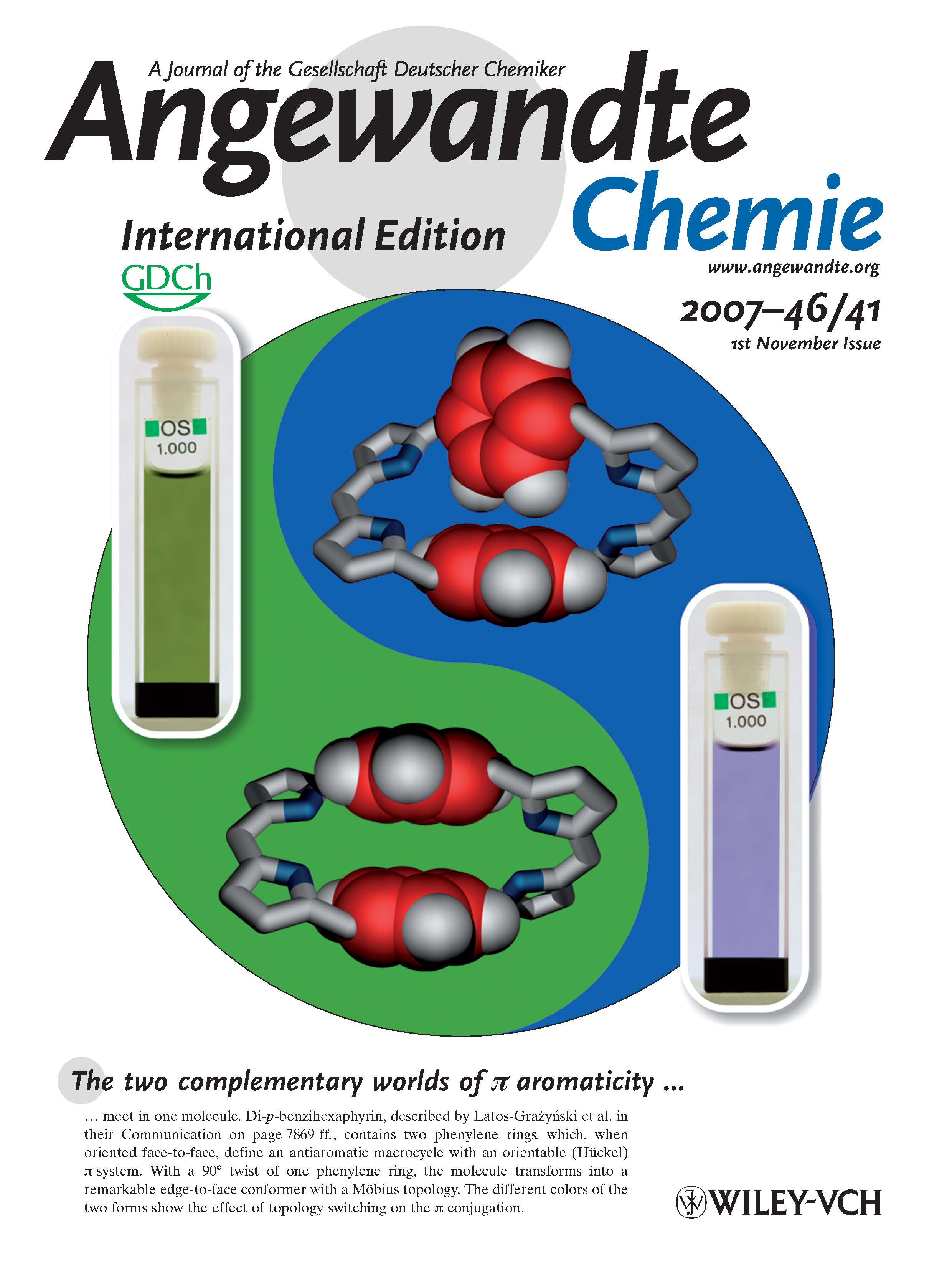
Angew. Chem. 41/2007 inside cover

Angew. Chem. · 2007

Topological aromaticity switch

Two complementary modes of cyclic π conjugation meet in one molecule. Di-p-benzihexaphyrin can switch between an antiaromatic Hückel topology and an edge-to-face Möbius conformer, with the accompanying color changes revealing how topology controls π conjugation.

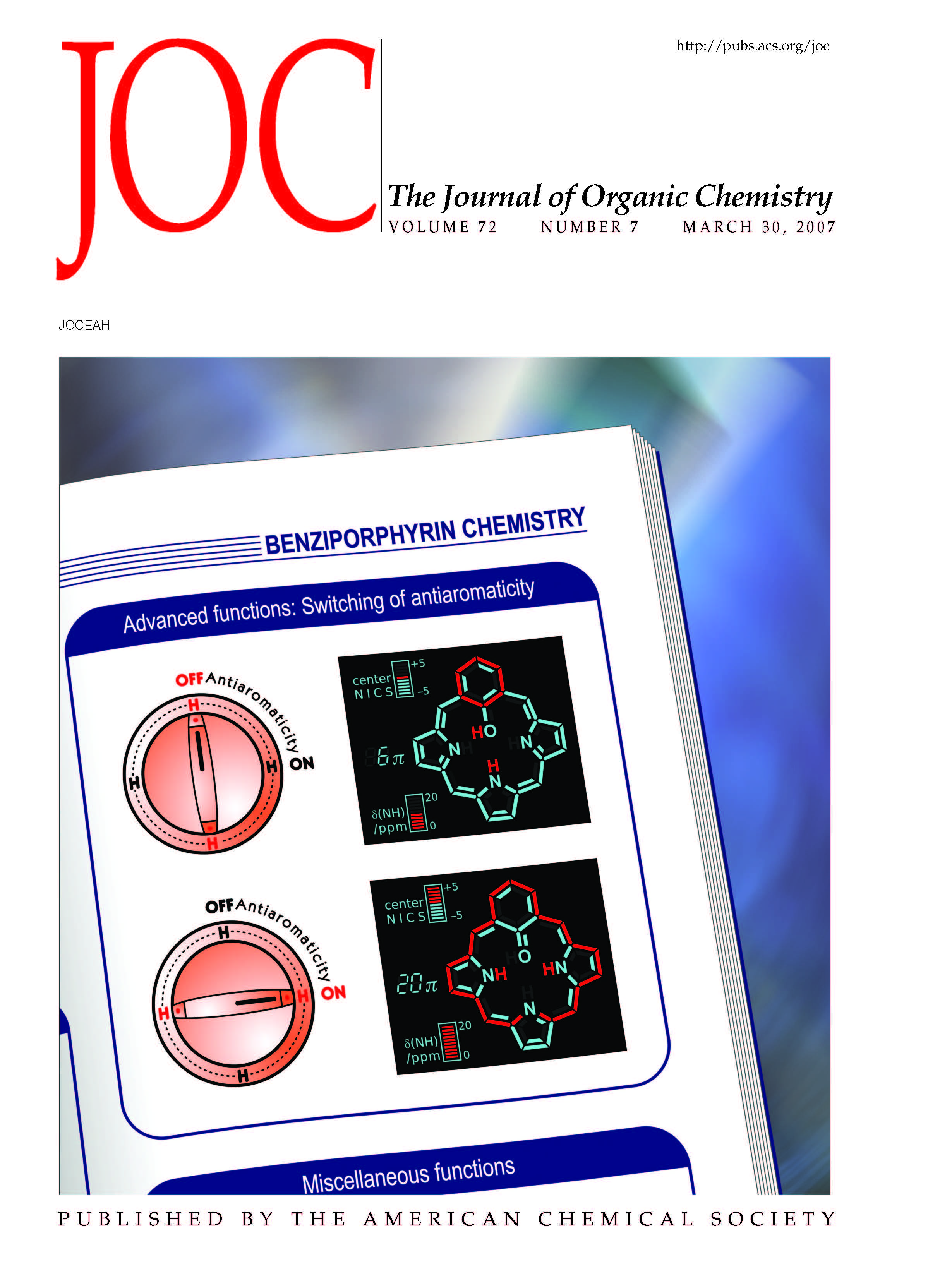
J. Org. Chem. 7/2007 cover

J. Org. Chem. · 2007

Tautomeric control of antiaromaticity

The two inner protons of 22-hydroxybenziporphyrin, a phenol-containing porphyrin analogue, act as an antiaromaticity switch through keto–phenol tautomerization, which interconverts [6]- and [20]annulenoid conjugation pathways.